Executive Summary
The Powered Solutions division of B&W International stands for customer-specific energy and system solutions that are precisely tailored to real application requirements.Martin Weisser, Head of Research, Powered Solutions & Development, explains in an interview how resilient, near-series solutions are created from unusual application and usage requirements .
Modular, ready-to-use solutions for demanding applications in defense, BOS and industry are created on the basis of proven systems. Thanks to the close integration of engineering and production, even complex requirements can be implemented in a short space of time. The result: reliable systems that function under extreme conditions and deliver real added value in use.
"The measure of all things? "The imagination of our customers."
What must a product be able to do? What is technically feasible – and what really makes sense in real-life use? B&W International’s Powered Solutions division develops customer-specific system solutions for requirements that go beyond classic standards. Martin Weisser explains how resilient, near-series solutions are created from unusual application and usage requirements. As Head of Research, Powered Solutions & Development, this mechanical and automotive engineer is responsible for developing highly customized and practical enclosure and system solutions—from concept to implementation under real-world operating conditions.
What does the Powered Solutions division do, Mr. Weisser?
We focus on customer-specific engineering, which is closely interlinked with a production department specially set up for this area. We see ourselves as an engineering team with a clear focus on implementation – from the concept phase through development to the assembly of near-series systems. The starting point for many projects is our established standard systems, such as Energy.Cases, Starlink.Cases or technical transportation solutions. These often serve as the first point of contact for customers who say: “This basically works – but we need it adapted to our requirements. On this basis, we work together with the customer to develop individual systems that are precisely tailored to the respective application in terms of function, mechanics and energy. In this way, we create both tried-and-tested standard systems and highly customized solutions – always with the requirement that they are technically well thought out and function reliably under real conditions.
What does that mean in concrete terms? For which fields of application are your special solutions predestined?
Take our B&W energy.cases, for example: For use in the defense sector, mobile power and supply systems must not only be exceptionally robust, but also whisper-quiet, low-vibration, and so easy to handle that they can be operated reliably even under the harshest operating conditions and in a wide variety of environments. Practical transport, power, and logistics solutions play a central role, especially in the military environment. What is needed are systems that integrate seamlessly into existing structures, are quickly ready for deployment, and function continuously under extreme conditions—regardless of whether they are used in stationary, mobile, or rotating applications.
How do you develop the products required for this?
In many projects, we build upon existing B&W system modules and develop them further in a targeted manner. This allows us to implement a wide variety of solutions quickly, without having to start from scratch. Our energy.cases, for example, can be equipped with different battery technologies, power levels, and storage capacities—depending on the requirements for runtime, weight, temperature range, or charging behavior. Especially in extreme environmental conditions, such as very low temperatures, we need cell chemistries and system architectures that function reliably under these conditions.
How far does the degree of specialization go with these solutions?
The benchmark is always the specific application. We integrate exactly the hardware and software components that are required – no more and no less. This can range from specific control or monitoring functions and remote access to individually designed display and operating concepts. The decisive factor is that the system remains intuitive for the user and offers real added value in use.
And what if the suitcase doesn't fit …?
Then it is customized. In some projects, we have made specific mechanical modifications to the cases, for example, to meet strict weight or space requirements.
How long does it usually take until a solution developed by you is ready for use?
The development time depends heavily on the task, but is often in the region of a few weeks. As an industrial partner of NATO forces, we develop certified system solutions for numerous deployment scenarios. The decisive factor is that we have very closely interlinked development, engineering and implementation. This enables us to implement even complex systems comparatively quickly without compromising on quality or operational readiness. One example is a project for a manufacturer of reconnaissance and operational drones, where we designed, developed and built a fully operational, customer-specific solution within around seven weeks.
What was this project about?
A special case was developed that not only protects the sensitive components of a sophisticated drone system, but also integrates the entire energy and charging infrastructure. This included chargers with active temperature control for the batteries and other elements. A key advantage of our solutions is that high-performance batteries can be transported safely and kept ready for use. This shortens preparation times, increases the operational availability of the systems and considerably simplifies logistical processes during use.
You bundle your company's engineering expertise in the Powered Solutions division. How do your customers benefit from this innovative strength?
Through close collaboration with our customers, we challenge existing approaches early on and refine them in a targeted manner. Often, the goal is not to invent something entirely new, but rather to combine and scale existing technologies in such a way that they deliver real added value under real-world operating conditions. One example is a project for a German defense company working on a novel reconnaissance and sensor system. Here, we developed a modular power solution in which multiple B&W energy.cases can be interconnected. This allows the available power to be flexibly adapted to the specific mission—without heavy equipment and with high reliability.
It probably needs to, because AI-based systems have high energy requirements ...
That is correct. As computing power increases, the requirements for a stable, mobile power supply increase significantly. Our approach is to operate powerful computing, control and communication systems as close as possible to the place of use and to supply them reliably with energy. To achieve this, we develop compact, decentralized systems in which high-performance batteries, power distribution and control are combined in a robust housing. We are currently working intensively on precisely such solutions.
Who else uses your expertise in the field of Powered Solutions?
In addition to defense applications, we work with clients such as the THW, fire departments, disaster response organizations, as well as event and industrial clients. The requirements range from temporary power supply and mobile technology platforms to highly specialized individual applications. The fact that our solutions do not always stem from traditional deployment scenarios is demonstrated by a project for an operator of floating bouncy castles and slides, for whom we implemented a waterproof power solution. Our cases are structurally designed for this purpose right from the factory—sometimes resulting in very unexpected but technically exciting applications.
About Martin Weisser
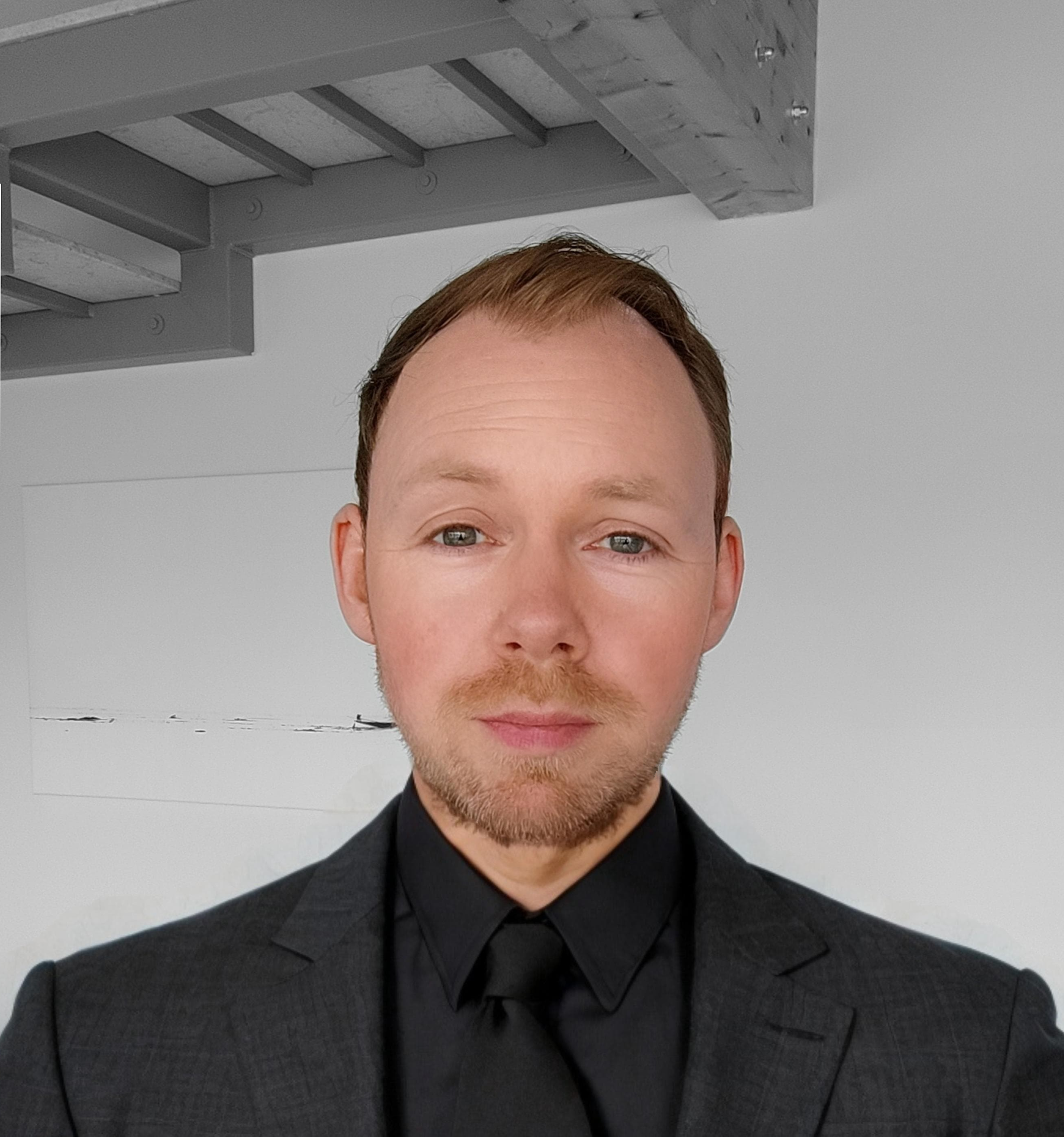
Martin Weisser is responsible for the development and strategic direction of the Powered Solutions division at B&W International. He is behind central developments in the field of self-sufficient energy and defense systems. The solutions of the Plug & Protect program bear his signature: functional, operational and technically at the highest level. With a degree in mechanical and automotive engineering, he heads up the Powered Solutions division and technical development.
During his career, he worked on vehicle armor and field camp protection projects, completed his master’s degree in vehicle engineering and founded the company Tronos, which is now part of the B&W Group.